Updated November 2026
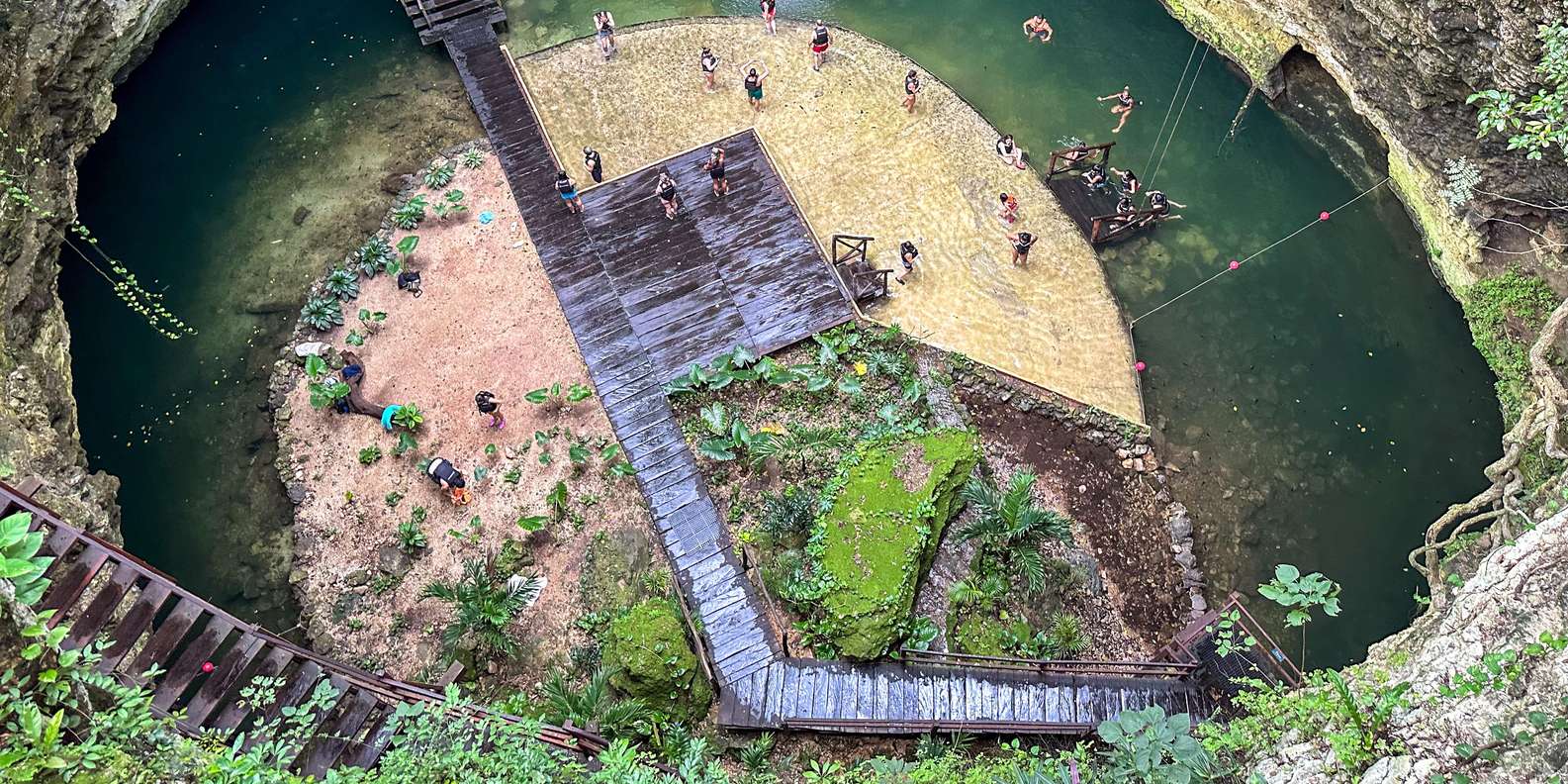
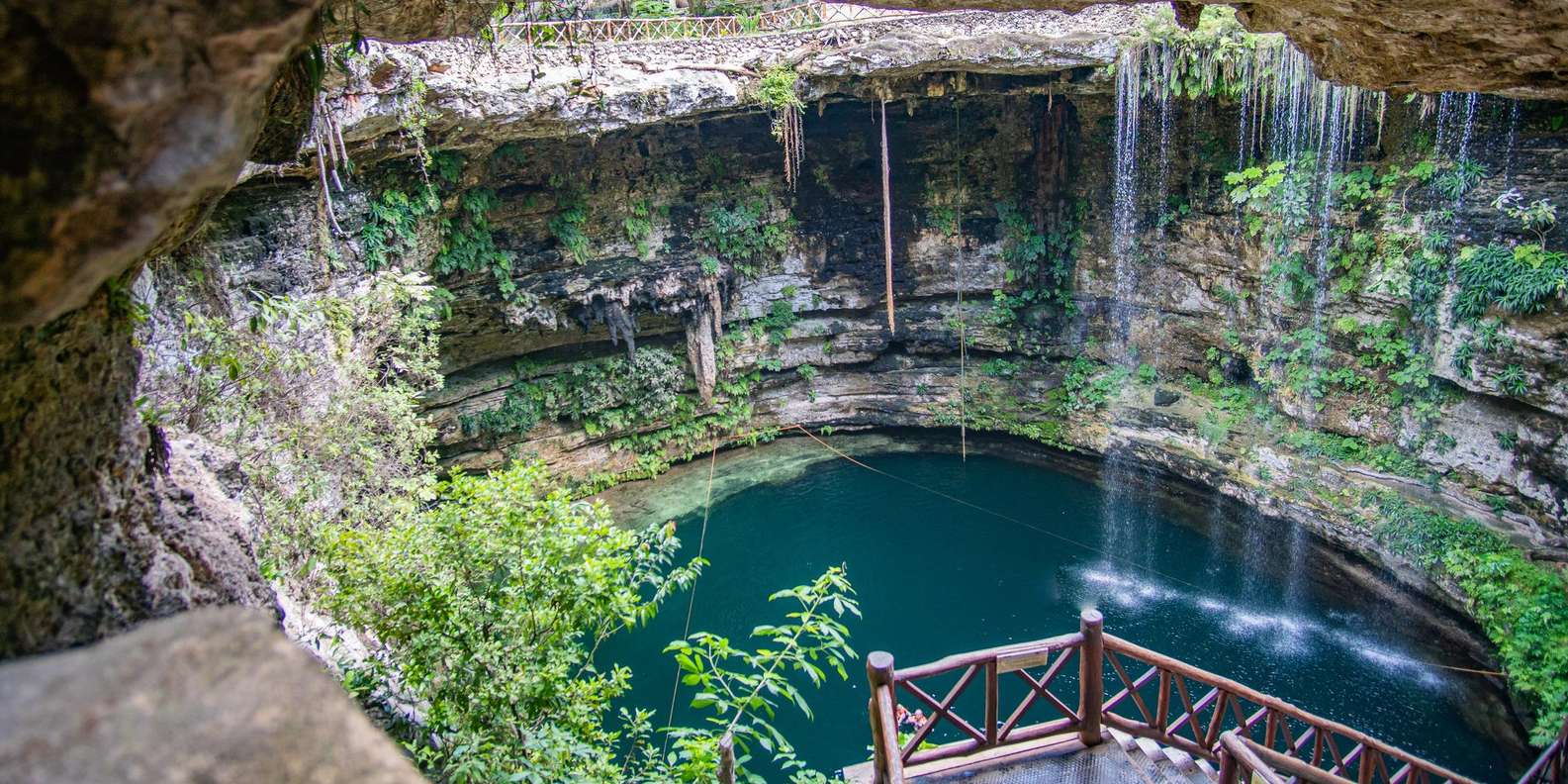
A cenote is a natural sinkhole where the limestone has collapsed into an underground river, leaving a pool of clear, cool fresh water. The Yucatán has thousands of them, and a swim after the heat of Chichen Itza is the highlight of the day for many visitors.
Cenotes closest to Chichen Itza
- Ik Kil — about 3 km from the site. A deep, round open cenote with hanging vines and a long staircase down to the water. Very photogenic, and very busy at midday with tour groups.
- Yokdzonot — about 15 km west, run by a local community cooperative. A large open cenote that is usually calmer than Ik Kil.
Cenotes around Valladolid
- Suytun — a cave cenote with a stone platform in the middle; around midday a beam of light falls through the hole in the roof.
- Zací — right in the centre of Valladolid, a semi-open cenote you can reach on foot from the main square.
- Oxmán — at an old hacienda south-west of Valladolid, with a rope swing and a pool and restaurant on the grounds.
- Dzitnup (X’keken and Samulá) — two cave cenotes a few minutes from Valladolid, with stalactites and a small opening in the roof.
- Chichikan and Saamal — large, well-equipped cenotes used by many day tours, with changing rooms and restaurants.
Rules and tips
- You must shower before you swim, and most cenotes do not allow sunscreen or insect repellent in the water — it harms the ecosystem.
- Life jackets are often compulsory and can be rented on site; lockers and towels cost extra.
- Entry is paid in cash at most cenotes; bring small pesos notes.
- Water shoes help on wet stone steps, and the water is cool (around 24–25 °C) all year.
Cenote on a tour or on your own?
Almost every day tour to Chichen Itza from Cancun includes a cenote — check which one on the booking page. With a rental car you can visit two or three on your own and pick quieter ones; see our 7-day Yucatán road trip.